Dress right on the slope

Dressing correctly on the slopes is about dressing smart. When you are warm, dry, and can adapt to the weather and activity, skiing becomes both more fun and more comfortable.
In the mountains, the weather can change quickly. It can be cold in the morning, milder in the middle of the day, and windy at the top. Therefore, it is good to think in layers and choose garments that work together.
Dress in layers
The best way to dress for skiing is in layers. This makes it easier to adjust your clothing during the day depending on the weather and temperature. If you get warm, you can take off a layer, and if you start to feel cold, you can put on more again. This makes it easier to maintain a steady and comfortable temperature throughout the day on the slopes.
The three layers have different functions:
the innermost layer wicks away moisture
the middle layer retains heat
the outer layer protects against wind, snow, and moisture
When the layers work together, it becomes easier to stay both dry and comfortably warm.
Base Layer
The base layer should sit close to the body and help wick away moisture. Wool or technical fabric is usually best. Cotton is less suitable because it easily gets cold when it becomes damp.
Common garments in the base layer:
base layer top
base layer bottoms
sports bra or performance underwear
socks in wool or wool blend
Midlayer
The midlayer should build warmth and help the body maintain an even temperature. What works best depends on the weather, wind, and how cold you usually get. On cold days, you may need more than one midlayer.
Common garments in the midlayer:
fleece
wool sweater
light down jacket or lightweight insulated jacket
extra long-sleeved shirt
Don’t forget your face, hands and feet
On the slopes, it is often the face, hands and feet that feel cold first. The nose and cheeks are especially exposed, particularly when it is windy. That is why it is important to protect them properly and keep them warm and dry throughout the day. A buff or neck warmer that can be pulled up over the chin, cheeks and nose is an easy way to protect the face from wind and cold.
Good to keep in mind:
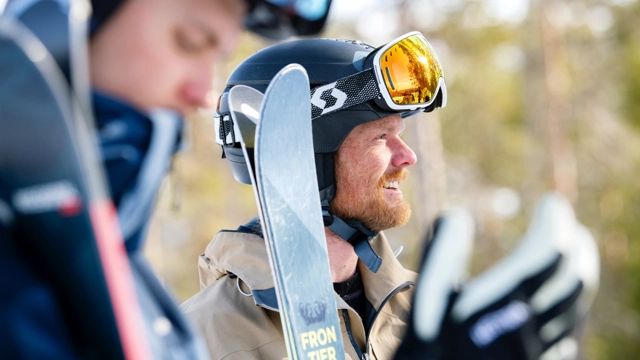
beanie or helmet with a good fit
buff or neck warmer that can be pulled up over the face
warm mittens or gloves
an extra pair of mittens, especially for children
socks that keep you warm without making the ski boots or shoes too tight

Adjust the clothes to the weather
There is no ski outfit that fits every day. Sun, wind, cold, and wet snow require different amounts of warmth and protection. Therefore, it is wise to look at the weather before you go out and adjust the layers to the day’s conditions.
The goal is to be warm without getting too warm. If you get sweaty, the risk increases that you will get cold later.
Dress Children Properly on the Slopes
For children, the right clothing is especially important. They get cold easily when sitting still, but can also quickly get warm when they play and ski a lot. Layering works especially well for children too.
The most important thing is that children stay dry, have warm hands and feet, and can change clothes if something gets wet.
Especially good to have for children:
an extra pair of mittens
extra base layers
dry socks
a warm sweater to change into
neck warmer or buff

Common mistakes to avoid
A common mistake is to put on too much right away. Then you can easily get sweaty, which can make you get cold later. Another is to wear cotton next to your body or to underestimate how much wind affects the experience.
It is also easy to focus on the jacket and forget things like socks, gloves, and neck protection. Often it is those details that determine how the day feels.
Summary
Dressing properly on the slopes is about keeping it simple and functional:
start with a base layer in wool or performance material
choose mid layers that add warmth
have an outer layer that protects against wind and moisture
keep hands, feet, and head warm
adapt clothing to the weather and activity
When your clothing works, your ski day becomes both easier and more fun.